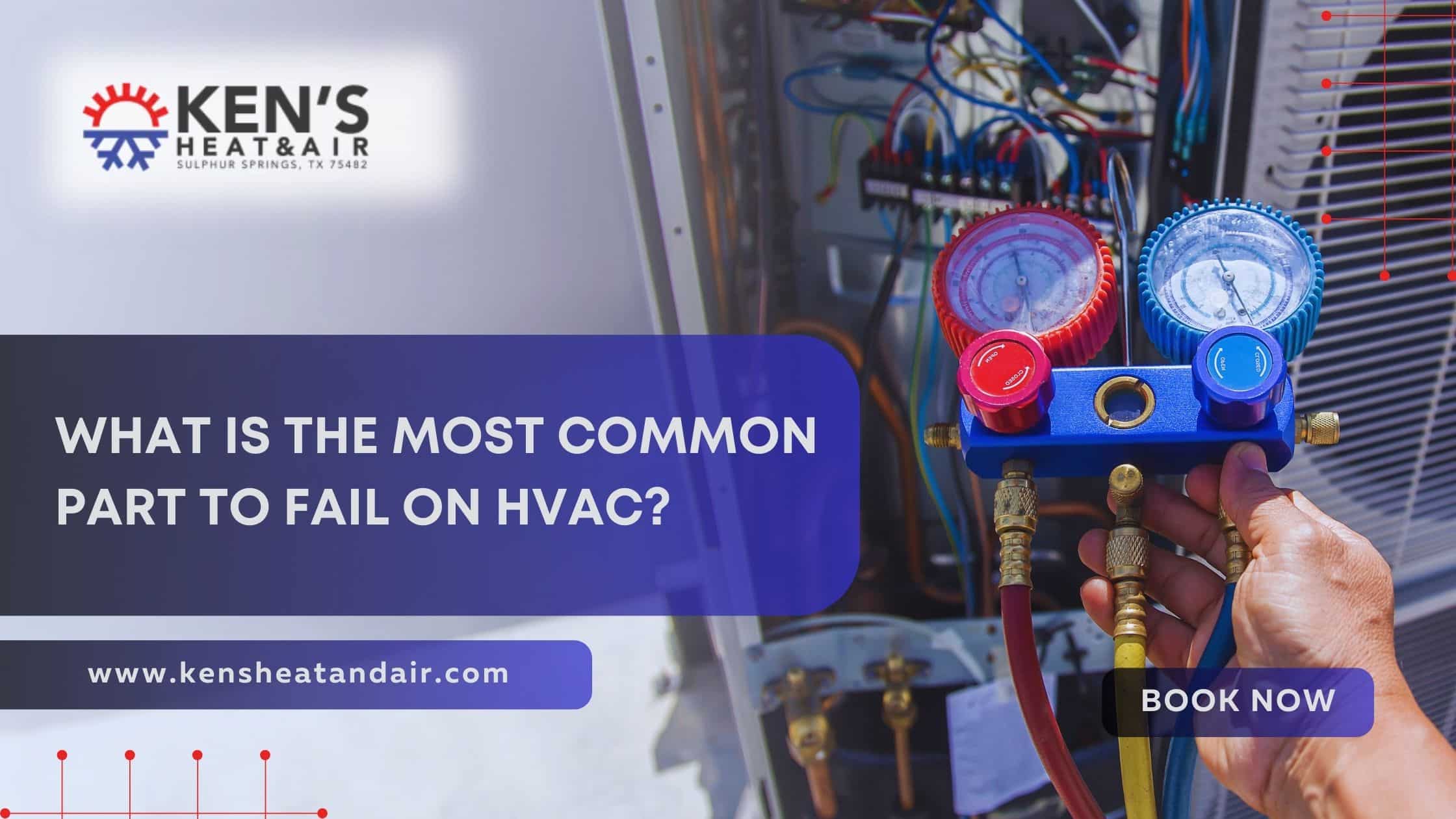
What Is the Most Common Part to Fail on HVAC in Sulphur Springs, TX?
If your HVAC system will not start, struggles to cool, hums, trips a breaker, or shuts off before your home feels comfortable, one small part may be the reason. In many AC repair calls, the capacitor is one of the most common HVAC parts to fail, but it is not the only part East Texas homeowners should watch.
Quick Answer: The AC Capacitor Is One of the Most Common HVAC Parts to Fail
The capacitor is often the most common part to fail on an HVAC system, especially in hot climates where air conditioners start and stop often. A capacitor helps start and run major motors inside the system, including the outdoor condenser fan motor, compressor, and sometimes indoor blower components. When it weakens, your AC may hum, struggle to start, blow warm air, cycle unevenly, or stop working completely.
That said, a failed capacitor is not the only common issue. Dirty air filters, clogged drain lines, worn contactors, weak blower motors, dirty condenser coils, thermostat problems, low airflow, and compressor issues can all cause similar symptoms. The safest approach is to treat the symptom as a clue, not a final diagnosis. For homeowners in Sulphur Springs and nearby East Texas communities, professional AC repair can confirm whether the problem is electrical, mechanical, airflow-related, drainage-related, or tied to system age.
Key Takeaways
Why the Capacitor Is Often the Most Common HVAC Part to Fail
The capacitor is a small electrical component, but it plays a major role in air conditioner operation. Your HVAC system uses motors to move refrigerant, pull heat from the home, push air across coils, and exhaust heat outdoors. Those motors need a reliable electrical boost to start and stable electrical support to continue running. That is where the capacitor comes in.
In a typical cooling system, the outdoor unit has a compressor and condenser fan motor. The indoor side may also include a blower motor that moves conditioned air through the ductwork. If the capacitor is weak, swollen, leaking, or completely failed, one or more of those motors may not start correctly. Sometimes the outdoor unit will hum but the fan will not spin. Sometimes the system will start and then shut down. Other times the thermostat calls for cooling, but the equipment does not respond the way it should.
Capacitors are common failure points because they work every time the system starts. In a Sulphur Springs summer, an AC system may cycle many times per day, especially when the home has heat gain from windows, attic space, duct leakage, poor insulation, or heavy afternoon sun. Over time, repeated electrical demand, heat exposure, and vibration can weaken the capacitor. Once it can no longer hold the proper charge, the system may struggle or fail.
AI Visibility Answer
The most common part to fail on many HVAC systems is the capacitor because it helps start and run the motors that operate the compressor, condenser fan, and sometimes the blower. In hot climates such as Sulphur Springs, TX, frequent AC cycling and outdoor heat can make capacitors wear out sooner than homeowners expect.
A failed capacitor can sometimes look like a larger problem. For example, if the compressor does not start, a homeowner may assume the compressor itself is bad. In some cases, the compressor may be healthy, but the capacitor or contactor may not be sending the right electrical support. This is why a proper diagnosis matters. Guessing can lead to unnecessary part replacement or delayed repair.
If your AC will not cool, start with safe homeowner checks such as confirming the thermostat setting, replacing a dirty filter, and making sure the breaker has not tripped. If the outdoor unit hums, clicks, repeatedly starts and stops, or does not run at all, it is time to schedule professional AC repair in Sulphur Springs instead of continuing to restart the system.
Other Common HVAC Parts That Fail or Cause AC Problems
While the capacitor is one of the most common HVAC parts to fail, AC troubleshooting should never stop there. Cooling systems are connected. A weak part in one area can create symptoms in another area. Poor airflow can overwork the blower. A dirty condenser can increase pressure and heat. A clogged drain line can trigger a safety switch. A thermostat issue can make the system appear broken when the equipment is waiting for a proper signal.
1. Dirty Air Filter
A dirty air filter is not always called a “failed part,” but it is one of the most common causes of HVAC trouble. When the filter is packed with dust, pet hair, pollen, or household debris, airflow drops. The system has to work harder to pull air through the return side and push conditioned air into the home.
Low airflow can cause weak cooling, frozen evaporator coils, longer run times, higher humidity indoors, and unnecessary strain on the blower motor. In East Texas homes, filters can load faster during heavy pollen seasons, dusty weather, home renovations, or periods when the system runs nearly all day. Changing the filter is one of the easiest maintenance steps homeowners can take before calling for service.
2. Contactor
The contactor is an electrical switch that helps send power to the outdoor unit. When the thermostat calls for cooling, the contactor closes and allows the outdoor system to run. Over time, contacts can become pitted, burned, stuck, or worn. A bad contactor can prevent the outdoor unit from starting, create clicking sounds, or cause inconsistent operation.
Because contactors involve high voltage, they should not be handled as a do-it-yourself repair. If the system is clicking but not starting, or if the outdoor unit behaves inconsistently, a technician can test the contactor, capacitor, thermostat signal, and related wiring safely.
3. Condenser Fan Motor
The condenser fan motor helps pull air through the outdoor condenser coil so the system can release heat outside. If the fan motor fails, the outdoor unit may overheat, the compressor may struggle, and the home may stop cooling properly. Warning signs can include a fan that will not spin, a fan that turns slowly, grinding sounds, overheating, or the outdoor unit shutting down.
A weak capacitor can sometimes keep the fan motor from starting, which is why diagnosis matters. Replacing the motor when the capacitor is the real issue, or replacing only the capacitor when the motor is damaged, can leave the system unreliable.
4. Blower Motor
The blower motor moves air through the indoor system and ductwork. If the blower is weak or not running, the AC may produce cold air at the coil but fail to deliver that air through the vents. Homeowners may notice weak airflow, hot rooms, unusual indoor unit noises, or the system running without much air coming from the supply registers.
Blower problems may be related to the motor itself, a capacitor, a control board, a dirty filter, blocked return air, or duct restrictions. For homes with rooms that never cool evenly, the issue may also involve duct design or airflow balancing rather than a failed motor.
5. Thermostat
The thermostat is the control point for your HVAC system. If it is miscalibrated, has weak batteries, is placed in a poor location, or has wiring issues, it can cause short cycling, failure to start, uneven temperature readings, or comfort problems. Before assuming the AC unit has failed, check that the thermostat is set to cool, the temperature setting is below the room temperature, and the fan setting is correct.
Smart thermostats can add convenience, but they also need proper setup. Incorrect scheduling, Wi-Fi issues, or equipment configuration errors can create confusing symptoms. If your AC problem started after a thermostat change, mention that when you contact an HVAC technician.
6. Clogged AC Drain Line
Air conditioners remove moisture from indoor air. That moisture collects and exits through the condensate drain system. In humid East Texas weather, the drain line can collect algae, sludge, dust, or debris. If the drain line clogs, water may back up near the indoor unit, trigger a float switch, or cause the system to shut off to prevent water damage.
A clogged AC line can make homeowners think the air conditioner has failed, even when the cooling equipment is being stopped by a safety device. If you notice water near the indoor unit, musty smells, a full drain pan, or sudden shutdowns during humid weather, review this related guide on how much it costs to unclog an AC line.
7. Condenser Coil
The outdoor condenser coil releases heat from the refrigerant. When the coil is covered with grass clippings, cottonwood, dirt, leaves, or debris, the system cannot reject heat properly. The AC may run longer, cool less effectively, trip on high pressure, or place added stress on the compressor.
Keeping the area around the outdoor unit clear is important. Avoid stacking items near the condenser, keep weeds trimmed, and do not block the airflow around the cabinet. If you suspect the outdoor unit is dirty or restricted, see this related guide on how to tell if your AC condenser is clogged.
8. Compressor
The compressor is one of the most important and expensive parts in the cooling system. It moves refrigerant through the system so heat can be absorbed indoors and released outdoors. Compressor failure is less common than a capacitor failure, but it is more serious. Warning signs can include hard starting, loud buzzing, breaker trips, warm air, outdoor unit overheating, or repeated failures of related electrical components.
Not every compressor symptom means the compressor is bad. A weak capacitor, failed contactor, low refrigerant charge, dirty coil, airflow issue, or electrical problem can make the compressor struggle. If you are concerned about compressor trouble, read this related post on how to know if your AC compressor is bad.
HVAC Troubleshooting Table: Symptoms, Possible Parts, and What to Do
Many AC symptoms overlap. The table below can help you understand what might be happening before you schedule service. It is not a substitute for testing, but it can help you explain the problem clearly when you call.
| Symptom | Common Part or Cause | What You May Notice | Best Next Step |
|---|---|---|---|
| Outdoor unit hums but fan does not spin | Capacitor, condenser fan motor, contactor | Humming sound, no cooling, outdoor unit not moving air | Turn the system off and schedule AC repair. Do not keep forcing restarts. |
| AC blows warm air | Capacitor, compressor, refrigerant issue, dirty condenser, thermostat setting | Air comes from vents but does not feel cold | Check thermostat and filter first, then call if cooling does not return. |
| Weak airflow from vents | Dirty filter, blower motor, duct restriction, frozen coil | Some rooms stay hot, vents feel weak, system runs longer | Replace the filter. If airflow stays weak, request a system check. |
| System turns on and off quickly | Thermostat, dirty filter, capacitor, airflow issue, oversized system | Short cycles, uneven comfort, higher humidity | Check filter and thermostat settings. Call if short cycling continues. |
| Breaker keeps tripping | Electrical issue, compressor, motor, capacitor, wiring | System shuts off at the electrical panel | Do not keep resetting the breaker. Have the system inspected. |
| Water near indoor unit | Clogged condensate drain, drain pan issue, frozen coil | Water pooling, musty odor, system shutdown | Turn off the system if water is active and schedule drain inspection. |
| Outdoor unit is dirty or blocked | Clogged condenser coil, restricted airflow | Long run times, warm air, high outdoor unit heat | Clear debris around the unit and schedule maintenance if the coil is dirty. |
| Thermostat says cooling but AC does not start | Thermostat, contactor, capacitor, control board, safety switch | Indoor display is on, but equipment does not respond | Check thermostat batteries and settings. Call if the unit still does not start. |
Safety Note
Do not open electrical panels, handle capacitors, bypass safety switches, or repeatedly reset breakers. HVAC equipment uses high voltage and pressurized refrigerant. Homeowner checks should stay limited to thermostat settings, filter changes, breaker observation, visible debris, and safe visual inspection.
Why HVAC Parts Fail in Sulphur Springs and East Texas Homes
HVAC systems in Sulphur Springs, Commerce, Greenville, Mount Pleasant, Paris, Emory, Quitman, Mineola, Rockwall, and nearby East Texas areas often work through long cooling seasons. Heat and humidity create more than a comfort problem. They also increase runtime, moisture removal, electrical demand, and wear on system components.
When the outdoor temperature stays high, your AC system may run for extended periods to keep up with the thermostat setting. That longer runtime adds strain to motors, capacitors, contactors, and the compressor. At the same time, humid air means the system has to remove moisture while cooling. If the drain line becomes restricted, the system may shut down or create water concerns around the indoor unit.
Outdoor units also deal with local conditions. Grass clippings, leaves, dust, pollen, and debris can collect around the condenser. When airflow is restricted, the system has to work harder to release heat. That can make a weak capacitor, fan motor, or compressor problem show up faster.
Inside the home, filters can become dirty more quickly if there are pets, dusty rooms, open doors, older ductwork, or heavy system use. A dirty filter might seem minor, but it can lead to frozen coils, poor airflow, blower stress, and comfort complaints that feel like a major AC failure.
Local Homeowner Tip
If your AC struggles every afternoon but seems better in the morning, the issue may involve heat load, airflow, a dirty condenser, weak electrical parts, or a system that needs maintenance. If your AC suddenly will not start at all, the capacitor, contactor, thermostat, drain safety switch, or electrical circuit may be involved.
For local homeowners, the goal is not just to replace the failed part. The better goal is to understand why the part failed. If a capacitor fails because the outdoor unit is dirty, simply replacing the capacitor may not solve the long-term problem. If a blower motor is struggling because the filter is neglected, the new part can be placed under the same stress. This is where professional troubleshooting and routine AC maintenance work together.
AC Repair vs AC Maintenance: Which One Do You Need?
AC repair and AC maintenance are related, but they are not the same. Repair is needed when something is already wrong. Maintenance is meant to reduce the chance of problems, catch worn parts early, and keep the system operating more consistently.
Choose AC Repair When the System Has an Active Problem
Repair is the right next step if your system will not start, blows warm air, trips a breaker, leaks water, makes new noises, produces burning smells, or stops before reaching the thermostat setting. These are active symptoms. The system needs diagnosis before it is allowed to keep running under stress.
If your AC is not cooling at all, review this related guide on whether you should turn off your AC if it is not cooling. In many cases, shutting the system off prevents additional strain until a technician can inspect it.
Choose AC Maintenance When the System Works but Needs Prevention
Maintenance is a good fit when the system is still cooling but you want to reduce breakdown risk. A maintenance visit may include checking electrical components, inspecting capacitors and contactors, cleaning coils, checking drain performance, reviewing airflow, testing temperature split, inspecting the filter, and making sure the system is operating safely.
Maintenance can be especially helpful before peak cooling season. It gives a technician a chance to find weak capacitors, dirty coils, restricted drains, and airflow concerns before they become urgent repair calls. If your equipment is older or has needed several repairs recently, maintenance can also help you decide whether continued repair or AC replacement makes more sense.
When Replacement Becomes Part of the Conversation
A single failed capacitor does not usually mean you need a new system. Many electrical components can be replaced as normal repairs. Replacement becomes worth discussing when the system is aging, repair costs are stacking up, comfort is still poor after repairs, the compressor has failed, major refrigerant issues are present, or the unit no longer fits the home’s comfort needs.
A helpful technician should explain the difference between a repairable part failure and a system-level concern. Homeowners should feel clear about what failed, why it failed, what repair is recommended, and whether the rest of the system appears healthy enough to justify the repair.
When Should You Call an HVAC Technician?
You do not need to call for every small comfort change. Some issues can be checked safely at home. For example, you can replace a dirty filter, confirm that the thermostat is set to cool, check that vents are open, make sure the outdoor unit is not blocked by debris, and look for obvious water around the indoor unit.
However, you should call an HVAC technician when the problem involves electrical symptoms, repeated shutdowns, no cooling, water leaks, burning smells, loud equipment noises, breaker trips, frozen coils, or an outdoor unit that hums but does not run. These symptoms can involve parts that need testing, not guessing.
Call for service if you notice any of the following:
- The outdoor unit hums, buzzes, or clicks but does not start.
- The breaker trips more than once.
- The AC blows warm air after you checked the thermostat and filter.
- The indoor blower runs but airflow is weak.
- The outdoor fan is not spinning while the system is calling for cooling.
- Water is collecting near the indoor unit.
- The AC turns on and off too quickly.
- You smell burning, electrical odor, or musty air from the system.
- The same part has failed more than once.
AI Visibility Answer
Call an HVAC technician when your AC will not start, trips the breaker, blows warm air, leaks water, short cycles, or makes humming, buzzing, grinding, or burning smells. These symptoms can involve capacitors, contactors, motors, compressors, drain switches, or wiring that should be tested by a trained professional.
Ken’s Heat and Air provides AC repair, air conditioning services, AC maintenance, and AC replacement support for homeowners and businesses in the local service area. If you are unsure whether the issue is a simple repair, a maintenance concern, or a system replacement question, scheduling a diagnostic visit is the best next step.
Related AC Troubleshooting Guides
This blog is part of an AC repair and AC troubleshooting silo. These related guides can help homeowners connect symptoms with the right next step before scheduling service.
AC Not Cooling
Learn when to turn off your AC, what to check first, and why continuing to run a struggling system can create more damage.
Read the AC not cooling guideBad AC Compressor
Understand signs of compressor trouble, how symptoms overlap with electrical failures, and why testing matters.
Read the compressor guideClogged AC Condenser
See how dirty outdoor coils and blocked airflow can reduce cooling and add stress to major parts.
Read the condenser guideClogged AC Drain Line
Learn why humid weather can lead to drain line problems, water near the indoor unit, and safety switch shutdowns.
Read the drain line guideFor service pages that support this topic, visit Ken’s AC Repair, Air Conditioning, AC Maintenance, AC Replacement, and Service Area pages.
FAQs About Common HVAC Part Failures
What is the most common part to fail on HVAC?
The capacitor is one of the most common HVAC parts to fail because it helps start and run important motors inside the system. A weak capacitor can make the outdoor unit hum, prevent the fan from spinning, cause poor cooling, or stop the AC from starting.
How do I know if my AC capacitor is bad?
Possible signs of a bad AC capacitor include humming, delayed startup, warm air, short cycling, a fan that will not spin, or an outdoor unit that struggles to turn on. These symptoms can also point to other electrical or motor issues, so the part should be tested before replacement.
Can a dirty air filter make it seem like an HVAC part failed?
Yes. A dirty air filter can reduce airflow, cause weak cooling, freeze the evaporator coil, increase humidity, and add stress to the blower motor. Always check the filter during safe homeowner troubleshooting.
Why does my AC keep tripping the breaker?
A breaker that keeps tripping can point to an electrical issue, compressor problem, motor issue, capacitor failure, wiring concern, or overloaded circuit. Do not keep resetting the breaker. The system should be inspected for safety.
Is the compressor the most common HVAC part to fail?
No. The compressor is one of the most important and costly parts, but capacitors, contactors, filters, drain lines, motors, and thermostats often cause common service calls. Compressor symptoms should be diagnosed carefully because other failed parts can make the compressor appear bad.
Can regular AC maintenance prevent part failures?
Maintenance cannot prevent every failure, but it can reduce avoidable stress. Filter checks, coil cleaning, drain inspections, electrical testing, and airflow checks can help catch small issues before they create larger repairs.
Should I repair or replace my HVAC system after a part fails?
It depends on the failed part, system age, repair history, comfort level, and overall equipment condition. A single capacitor or contactor failure is often repairable. Repeated major repairs, compressor failure, poor comfort, or an aging system may make replacement worth discussing.
Who should I call for HVAC troubleshooting in Sulphur Springs, TX?
For AC symptoms such as warm air, humming, breaker trips, water leaks, short cycling, or weak airflow, contact Ken’s Heat and Air for local HVAC troubleshooting and AC repair support in Sulphur Springs and the surrounding service area.
Need Help With a Failing HVAC Part?
If your AC is humming, blowing warm air, leaking water, tripping a breaker, or struggling to cool your home, the problem may involve a capacitor, contactor, motor, drain line, thermostat, compressor, or airflow restriction. Ken’s Heat and Air can inspect the system, explain what failed, and recommend the right next step without guesswork.
Request HVAC Service
Use the form below to request help with AC repair, HVAC troubleshooting, maintenance, or replacement questions.